
Divine Wonders
He has made everything beautiful in its time. Ecclesiastes 3:11
To Kill a Mockingbird
This Pulitzer Prize–winning novel has been translated into more than forty languages and has frequently appeared on required reading lists in American high schools and universities. Its film adaptation went on to win three Academy Awards.
Movie Recap
To Kill a Mockingbird is set in a small town in the American South during the Great Depression of the 1930s. The protagonist’s father, Atticus Finch, is an upright lawyer raising his son Jem and daughter Scout on his own.
They have a mysterious neighbor named Boo Radley, about whom many frightening rumors circulate. The siblings often sneak near Boo’s house to “explore” and frequently find small gifts he has left for them in a tree hollow.
Atticus defends Tom, a Black man falsely accused of raping a white woman. Although the evidence clearly proves Tom’s innocence, deep-seated racial prejudice leads to his conviction, and he is eventually shot dead while trying to escape. Worse still, the plaintiff’s father, feeling humiliated by Atticus’s defense, attacks Jem and Scout. Boo arrives just in time, kills the attacker, and saves the children.
Atticus struggles with whether to report Boo to the authorities, but Scout reminds him, “You told us it’s a sin to kill a mockingbird because mockingbirds don’t do any harm, and Boo is this town’s mockingbird.” In the end, Atticus chooses not to expose Boo and formally thanks him on behalf of his children.
Justice is undoubtedly one of the film’s central themes. In the Bible, the prophet Micah says to Israel: “He has shown you, O mortal, what is good. And what does the Lord require of you?” We might think of lofty acts such as great generosity or heroic self-sacrifice. Yet the very next line is: “To act justly and to love mercy and to walk humbly with your God.” I have long known that God values justice, but I never quite understood how it relates to walking with Him—until this film offered me some insight.
Courage
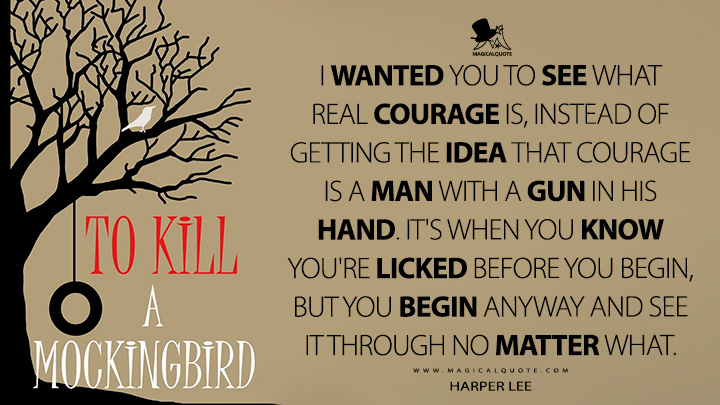
In the film, Atticus tells his children: “I wanted you to see what real courage is. It’s not a man with a gun in his hand. Courage is knowing you’re licked before you begin but beginning anyway and seeing it through no matter what.” This reminds me of the story in Daniel where three of his friends are commanded to bow down to the golden image set up by the king or be thrown into a blazing furnace. They reply,
“The God we serve is able to deliver us from it…
But even if He does not, we want you to know, Your Majesty,
that we will not serve your gods or worship the image of gold you have set up.”
To walk with God daily, living in His love and the hope of resurrection, frees us from fear and gives us the courage to stand firm for what is right—living in true freedom.
Wisdom
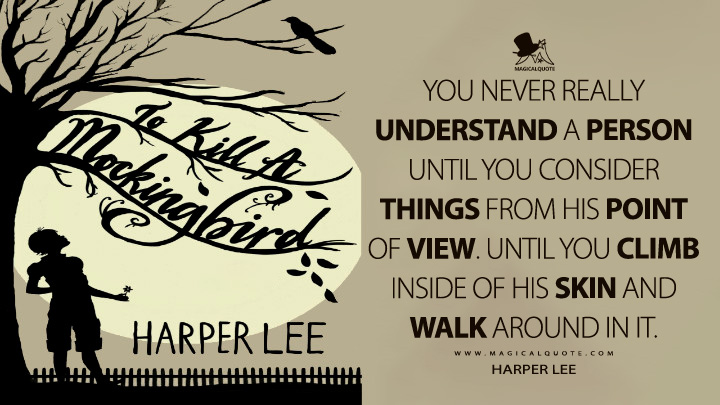
Atticus often encourages his children not to follow the crowd, but to observe and think for themselves. He tells them, “You never really understand a person until you consider things from his point of view… until you climb inside of his skin and walk around in it.” In the film, the townspeople speak with righteous indignation, unaware that the “justice” they believe in is steeped in prejudice and lies. Only by walking humbly with God can we share in His wisdom and see the truth clearly. No wonder that when Samuel was about to anoint the handsome Eliab as king, the Lord said to him:
“Do not consider his appearance or his height…
People look at the outward appearance, but the Lord looks at the heart”
—- 1 Samuel 16:7
Mercy
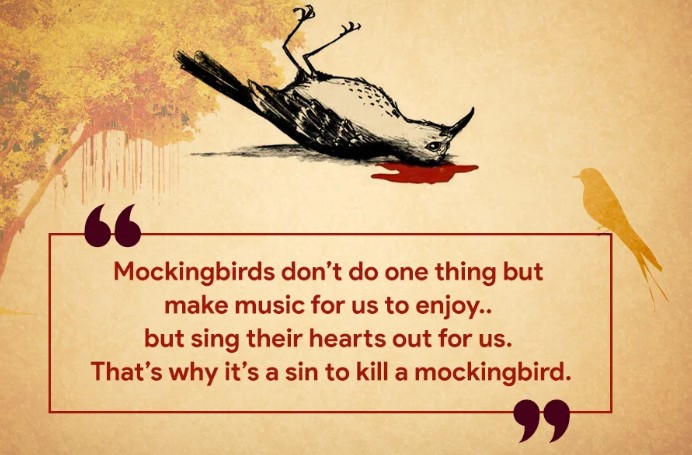
The title To Kill a Mockingbird serves as a warning not to harm the innocent—whether people or creatures. Yet God’s mercy goes beyond the “innocent.” In His eyes, no one is truly innocent, but anyone with a repentant heart can receive forgiveness. Humans—especially those who see themselves as morally upright—often dislike this “soft” approach. Even the prophet Jonah was outraged when God relented and spared the wicked city of Nineveh; Jonah was so angry that he wished to die. Instead of reasoning with him, God gave Jonah a living illustration through a plant he had not planted but still pitied. God then asked:
“Should I not have concern for the great city of Nineveh,
in which there are more than a hundred and twenty thousand people… and also many animals?”
Before reading the Bible, I also thought of myself as an innocent mockingbird. Scripture, however, is like a mirror that exposes the hidden deceit within me—things even I had never noticed. God’s mercy in not “killing” me is not because He is a lenient pushover, but because He let His only Son to bear the punishment that should have been mine.